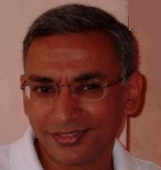
Amit Majumdar
San Diego Supercomputer Center, UCSD
Director of SDSC’s Data Enabled Scientific Computing (DESC) division. DESC consists of multiple groups: High Performance Computing Systems, User Services, Scientific Computing Applications, Scientific Visualization, and Cloud and Cluster Development. SDSC’s XSEDE program is coordinated from the DESC division by Bob Sinkovits, Co-PI of the XSEDE program.
Previously I was director of the Scientific Computing Applications group at the San Diego Supercomputer Center. The computational scientists, in the group, have expertise and experience in High Performance Computing (HPC) and have degrees in various domain sciences such as mechanical engineering, hydrology, biochemistry, nuclear engineering, and physics. The group’s main activities are HPC research and development work in collaboration with domain science users of NSF funded HPC resources. This collaborative R&D effort allows SDSC’s experienced computational scientists to work with domain scientists regarding algorithm development, code optimization, code profiling/tuning, mathematical library implementation, new programming model implementation etc.
I am an Associate Professor in the Department of Radiation Medicine and Applied Sciences, UCSD. Our collaborative interdisciplinary research involves application of HPC for adaptive radiation therapy.
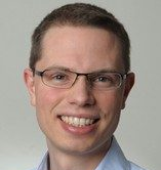
Dr. Andreas Goetz
Research Scientist, San Diego Supercomputer Center, UCSD
Andreas Goetz is co-director of the CUDA Teaching Center and co-principal investigator of the Intel Parallel Computing Center at SDSC. He has extensive experience with quantum chemistry and molecular dynamics simulations, and is a contributor to the ADF and AMBER software packages, both widely used in academic and industrial research. Andreas develops new multiscale and multilevel simulation models and optimizes code for new HPC architectures, including many-core and GPU accelerators. He collaborates on a variety of research projects in molecular simulation, computational catalysis, biophysics, and drug design, most prominently as a principal investigator with the National Renewable Energy Laboratory, as well as an international collaboration with the ENS Lyon in France. His work is funded through the Department of Energy, the National Institutes of Health, the National Science Foundation and Intel. Andreas also enjoys training the next generation of scientists in software development and numerical simulation methods via lectures, workshops and, supervision of interns. Prior to joining SDSC in 2009 Andreas performed postdoctoral research with Professor Lucas Visscher in quantum chemistry at the VU University in Amsterdam and obtained his undergraduate and Ph.D. degrees in chemistry with specialization on theoretical chemistry under guidance of Professors Bernd Hess and Andreas Goerling from the University of Erlangen in Germany.

Ange Mason
Education Program Manager, San Diego Supercomputer Center, UCSD
Ange Mason has worked at the San Diego Supercomputer Center at the University of California, San Diego for over 30 years. As the Program Manager for SDSC’s K-16 outreach programs, Ms. Mason has created the StudentTECH program, which provides STEM-focused workshops for middle and high school students, and the popular Research Experiences for High School Students (REHS) program. Always innovating and creating, Ms. Mason has also launching the Mentor Assistance Program (MAP), the Anita Borg Leadership and Engagement (ABLE) program for high school students and the Pi Wars robotics competition for middle and high school students. Ms. Mason received her BA in Psychology from UC San Diego.
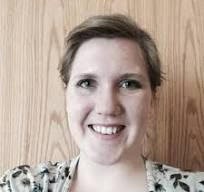
Claire Stirm
Project Manager, San Diego Supercomputer Center, UCSD
Claire Stirm a Project Manager with the San Diego Supercomputer Center and works on various research and software projects. Claire supports the Hubzero Platform team and hosted hubs. She works with hub owners and research PIs to optimize the platform to fit their research workflows. Claire is also a Co-PI am of the Science Gateways Center of Excellence. Claire leads consulting engagements and supports the community through outreach and event planning. Finally, Claire is the Associate Director of the Rev-Up Program, where she supports software projects at the San Diego Supercomputer Center interested in sustainability training and working one-on-one with sustainability experts.
Claire received a B.A. in Professional Writing and a secondary major in Classical Studies from Purdue University. She also received a M.S. in Communication with a focus in Strategic Communication from Brian Lamb School of Communication at Purdue University.
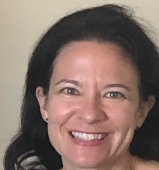
Kimberly Mann Bruch
Science Writer, San Diego Supercomputer Center, UCSD
Kim has worked on academic communication and distance learning projects for more than two decades, ranging from programs funded by the National Park Science and the National Science Foundation (NSF) to NASA and the U.S. Department of Energy. As a science writer for the San Diego Supercomputer Center, she composes pieces for the Center as well as several NSF-funded projects such as EarthCube, XSEDE, and the West Big Data Innovation Hub. Kim earned her BA from Western Kentucky University’s School of Journalism and Broadcasting and her MA from San Diego State University’s School of Communications.
Marty Kandes
Ph.D., Computational & Data Science Research Specialist, San Diego Supercomputer Center, SDSC
Computational & Data Science Research Specialist at San Diego Supercomputer Center at the university of California, San Diego.
Mary Thomas
Science Writer, San Diego Supercomputer Center, UCSD
Mary is a Computational Data Scientist in the Data-Enabled Scientific Computing Division and the lead for training on the Comet and TSCC systems. In addition, she is a Research Assistant Professor in the Department of Computer Science at San Diego State University, and an Associated Faculty member of the SDSU Computational Science Research Center. Her research is focused on parallel computing, coastal ocean modeling, cyberinfrastructure, and bioinformatics IT architecture using Amazon Web Services. Her current projects include parallelization of the General Curvilinear Coastal Ocean Model (GCOM) using the PETSc framework, optimization of a gene sequencing bioinformatics application, and developing Jupyter notebooks for scientific computing.
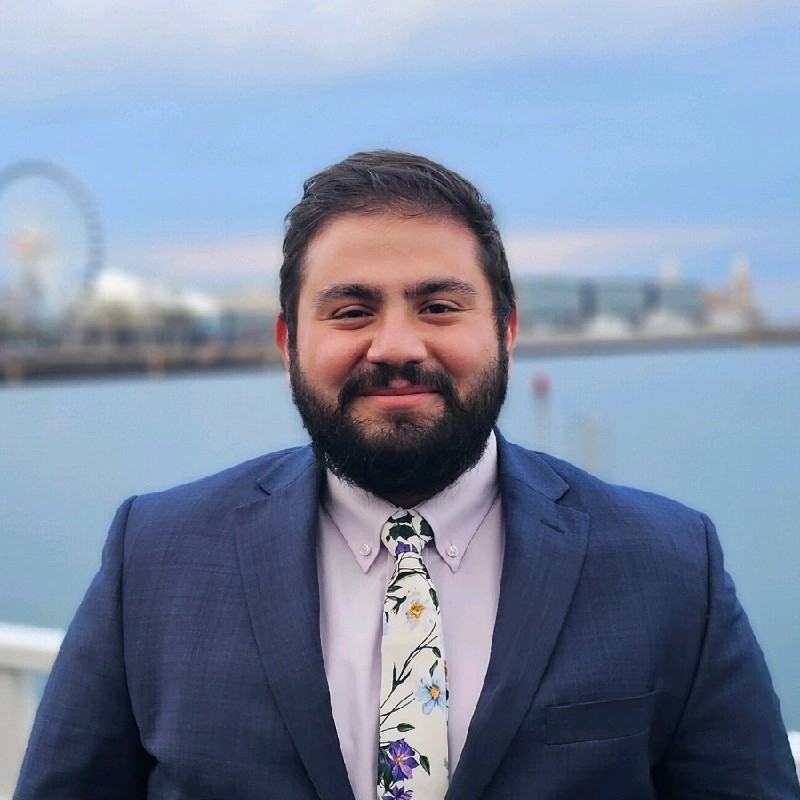
Mohammad Firas Sada
Computational and Data Science Research Specialist, San Diego Supercomputer Center, SDSU
Mohammad Firas Sada is a researcher at SDSC specializing in deep learning, high-performance computing (HPC), and advanced networking. His work within the Nautilus Kubernetes cluster at the National Research Platform focuses on distributed AI workflows, network programmability, hardware acceleration with novel compute architectures, and scalable cyberinfrastructure for data-intensive science. His interests include optimizing AI training across GPU clusters, accelerating scientific computing with programmable networks, and developing tools for large-scale data movement and workflow automation. He enjoys working with talented teams to foster collaboration, exchange ideas, and advance research in computing.



